Salt in Johnson County Streams
Every winter, millions of tons of salt are spread across U.S. roads, sidewalks, and driveways to fight ice and snow. That’s about 160 pounds per person nationwide.
In Kansas alone, 82,000 tons were applied during the 2023–24 season. Once the ice melts, much of that salt flows into storm drains, streams, wetlands, reservoirs, and even drinking water—where it can linger for months. Salt keeps us safe in winter, but too much harms our streams, wetlands, and drinking water. Smarter use and simple changes can protect both public safety and the environment.
Citizen scientists with the Johnson County Extension Master Naturalists (EMNs) began testing streams and wetlands in early 2025.
Monitoring in 2024-2025 showed that local streams and wetlands were exposed to potentially toxic salt levels for months.
These levels may harm flora and fauna and threathen ecosystem services provided by streams and wetlands (for example, reducing nutrient pollution, purifying water, and provisioning habitat for wildlife).
There is a tendency to use salt in excess, often way more than is needed or even recommended to clear streets and sidewalks from ice. Try these tips for homeowners to reduce salt usage:
- Shovel first – clear snow before it turns to ice.
- Use less salt – half a cup per square yard of sidewalk or driveway is enough. If you hear crunching, it’s too much.
- Know the limits – salt doesn’t work below 15°F; use sand or grit instead.
- Sweep and reuse – collect leftover salt to prevent runoff.
- Use alternatives to rock salt – magnesium chloride, calcium chloride, and liquid deicers have lower environmental impact.
- US EPA “chronic” limit: 230 ppm (4-day average) → long-term harm to aquatic ecosystems.
- EPA “acute” limit: 860 ppm (1 hour) → immediate harm to plants, fish, invertebrates and other aquatic life.
- Normal background in streams: 1–100 ppm.
- Drinking water standard: ≤230 ppm (above this, water tastes salty and may be unsafe).
Johnson County EMNs began testing streams and wetlands in early 2025.
- Before storms: chloride averaged 45 ppm in the 10 streams tested.
- After deicing: chloride spiked from 230 – > 750 ppm (the upper limit of our test strips), exceeding EPA safety limits.
- In one stream, chloride hit 450 ppm on January 11 after deicing on January 5 and stayed at or above harmful levels through March, with elevated concentrations above background from April-July.
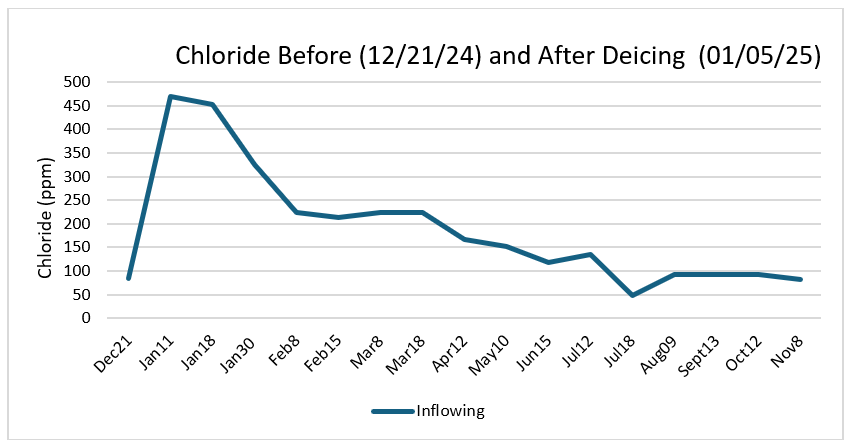
This means local streams and wetlands were exposed to toxic salt levels for months, harming flora and fauna. The ecosystem services provided by streams and wetlands that benefit humans (for example, reducing nutrient pollution, purifying water, and provisioning habitat for wildlife) were thereby threatened.
For the most recent results and data please contact John Fleeger at zoflee@lsu.edu.
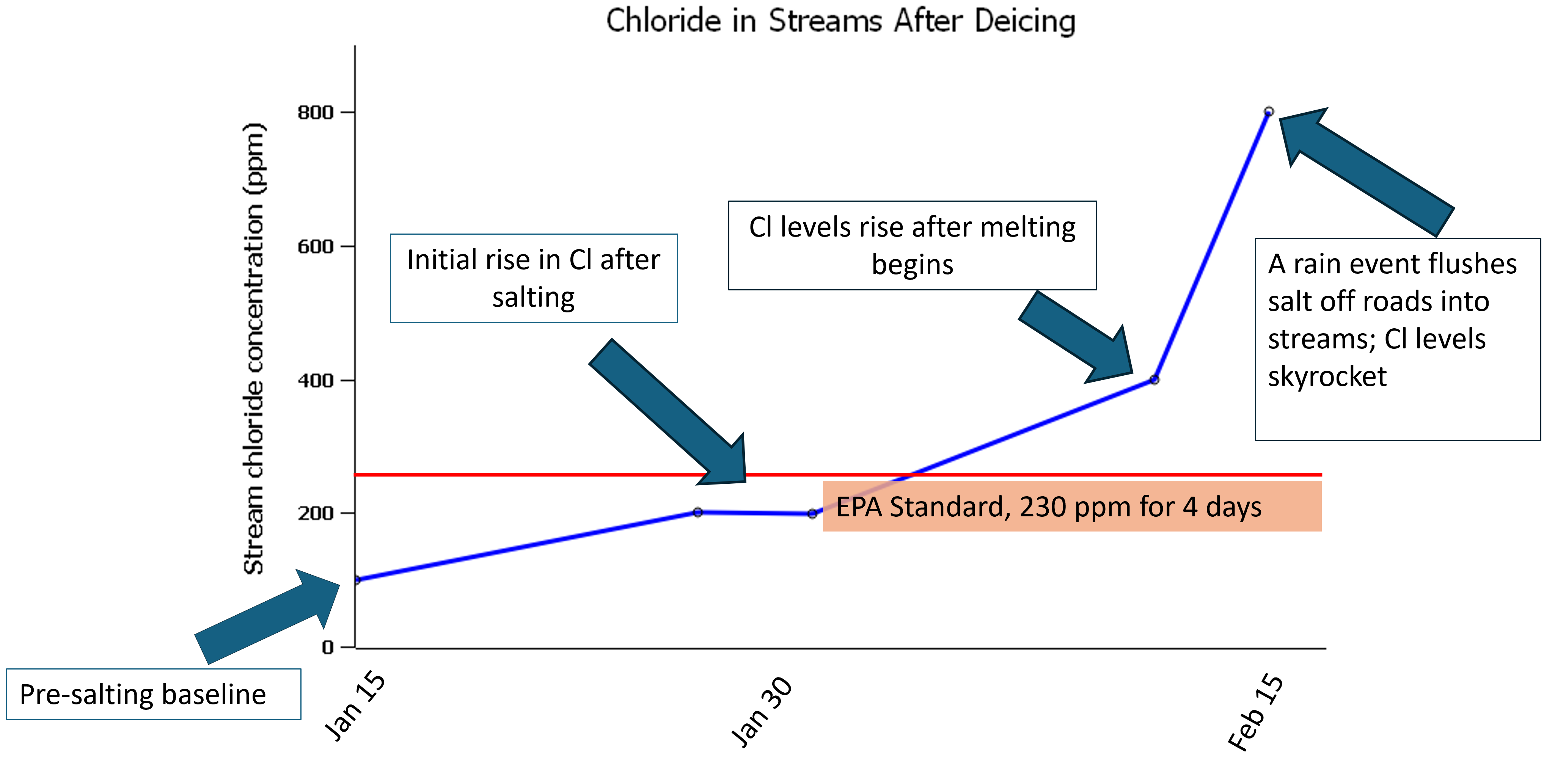
Hypothetical changes in stream chloride concentration after highway salting.
Related Resources
The Great Salt Debate (Article by JoCo Horiculture Agent, 2024)
Road Salt: Tips for Homeowners