Water Quality in Johnson County
The Johnson County Extension Master Naturalist (EMN) Water Quality Team monitors, protects and restores watershed health across Johnson County, Kansas. As citizen scientists, our volunteers collect stream data, share results, and educate the public on issues related to water quality.
Mill Creek runs through the heart of Johnson County from Olathe to the Kansas River, draining 70 square miles (45,000 acres) of public parkland, and extensive areas of residential and commercial development.
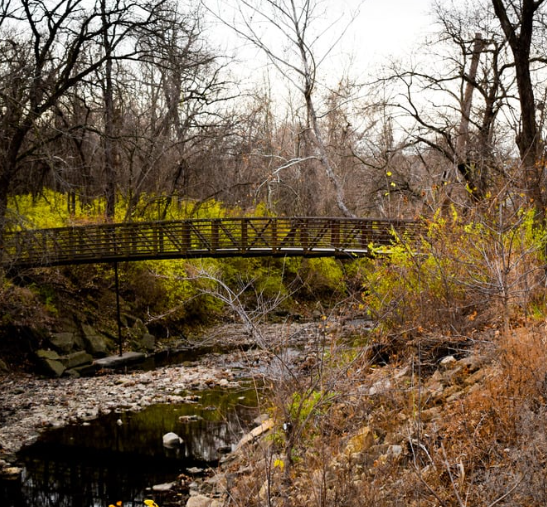
Stormwater runoff flows into the creek from across the watershed, collecting possible pollutants from the ground surface.
See a map of Mill Creek Streamway and Access Points (pdf).
See a map of the Johnson County Watershed (pdf).
Extension Master Naturalists monitor multiple sites:
- At Johnson County Parks Northgate access point access point, EMNs monitor in partnership with the Missouri Stream Team. Learn more about the Missouri Stream Team.
- At Lake Lenexa, EMNs study the role of the lake and its wetlands in removing and filtering pollutants. Learn more about the Lake Lenexa Project on the City of Lenexa website.
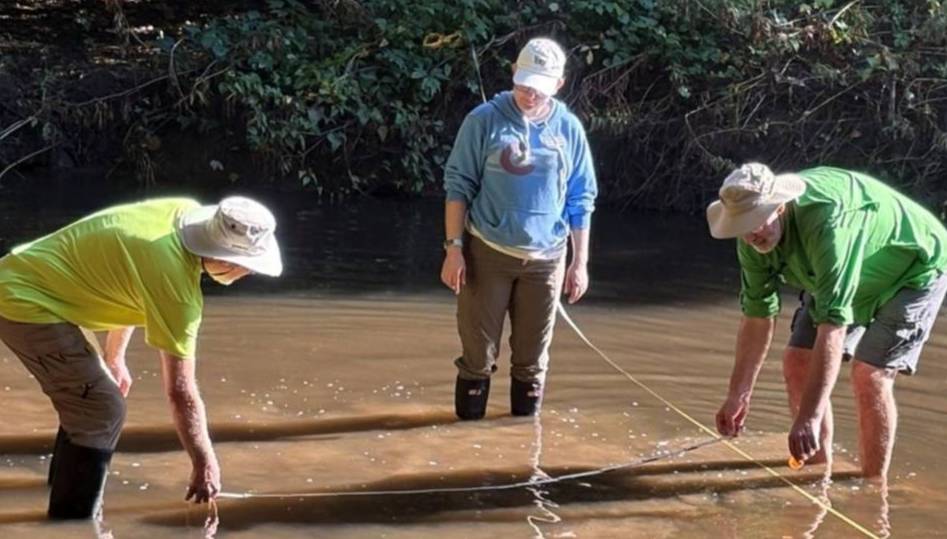
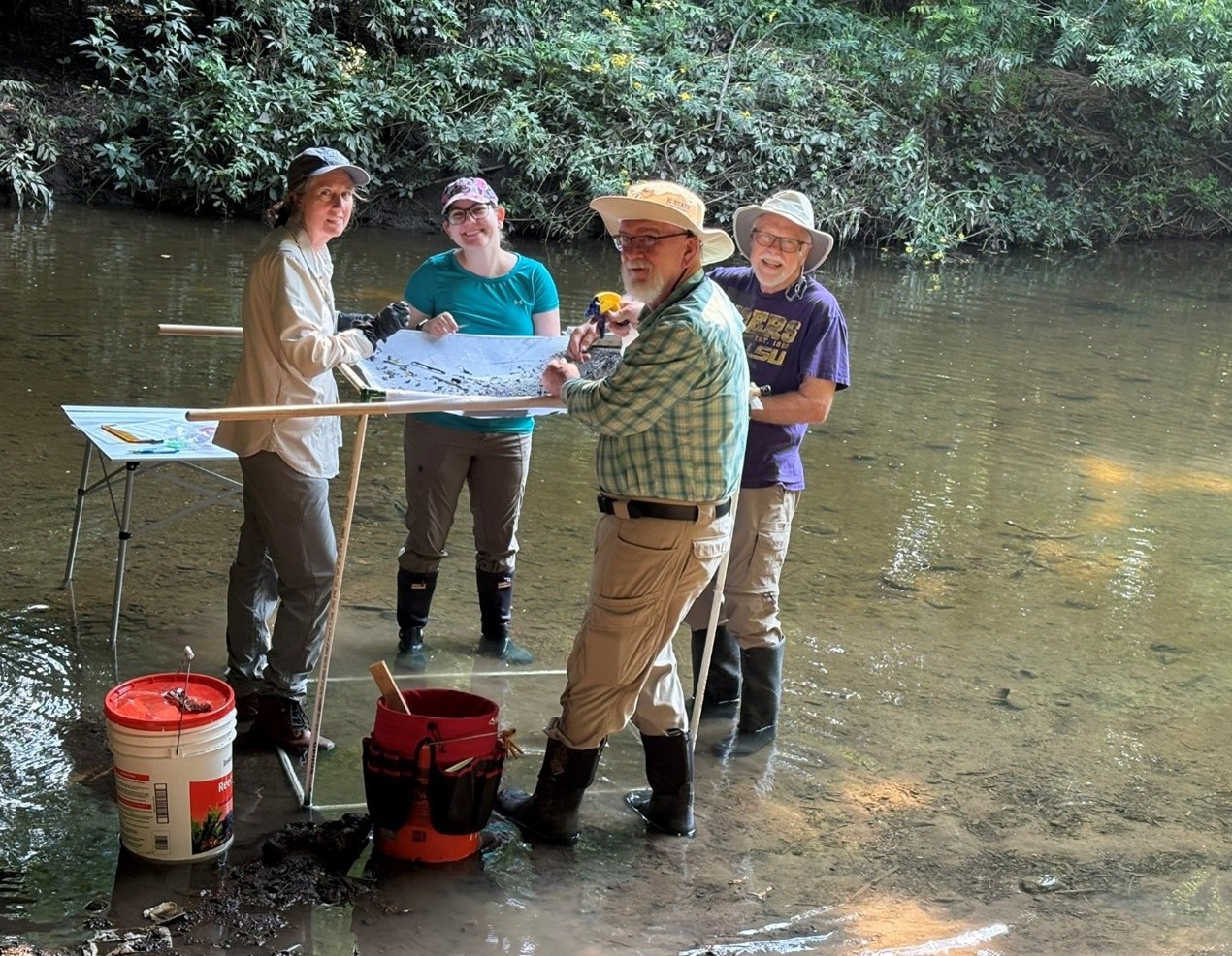 Monitoring is done along the full length of Mill Creek to identify areas of greatest concern, assess impacts of land use and development on water quality, and to develop a profile of stream health used in support of public education.
- Additional sites throughout Johnson County are monitored in partnership with the Izaak Walton League of America’s Salt Watch and Nitrate Watch programs to add our region to their national database. Visit The Izaak Walton League of America site to learn more about these programs.
Results show that water quality can be impaired by various pollutants, underscoring the need for additional monitoring and public action.
 Extension Master Naturalists share data and findings with:
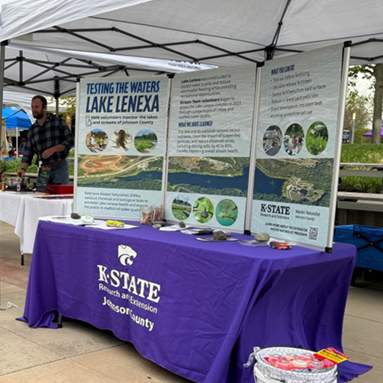 Extension Master Naturalists:
- Organize cleanups and habitat restoration (removing invasives like bush honeysuckle and garlic mustard).
- Lead programs for Master Naturalists, Junior EMNs, and Friends of the Kaw middle schoolers.
- Provide speakers through the K-State Extension Speakers Bureau. Request a speaker from the Speakers Bureau.
Clean Water: It Takes All of Us
Simple actions make a big difference...
-
-
- Skip driveway car washes – prevent soap, oil, and metals from entering streams.
- Limit lawn chemicals – reduce fertilizer and pesticide runoff.
- Test soil before fertilizing – apply only what’s needed.
- Pick up pet waste – stop bacteria and nutrients from contaminating waterways.
- Dispose of hazardous trash properly – protect wildlife and water quality.
- Conserve water – ease strain on treatment systems and preserve stream flow.
- Plant rain gardens – absorb runoff, filter pollutants, and support native species.
- Use native plants – stabilize soil, reduce water use, and boost biodiversity.
- Reduce deicing salt – learn best practices to prevent chloride pollution.
- Learn about harmful algal blooms - see the toolkit for private landowners.
-
Take action today—join a cleanup, plant native species, or volunteer with Extension Master Naturalists. Every choice you make helps protect Johnson County’s streams.
Return to Extension Master Naturalist home page.