Purple Martin Guardians
Biology
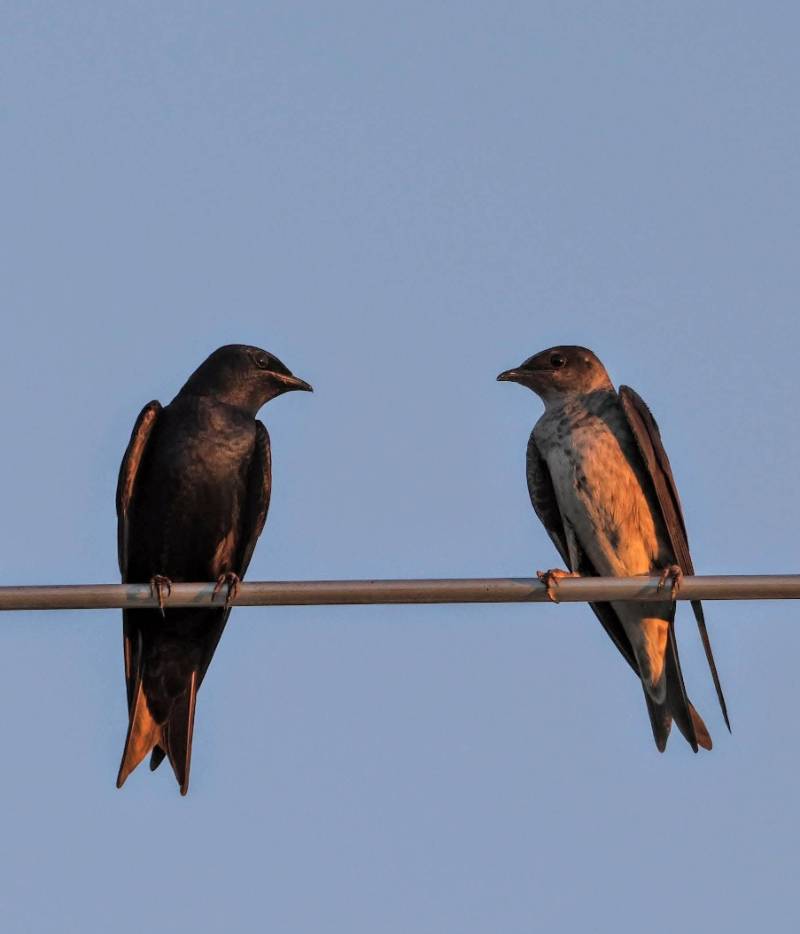
The Purple Martin is the largest of North America’s swallows. It averages 7” to 8” tall with a 15” wingspan. It is celebrated for its spectacular aerial acrobatics and highly social colonization. Adult males feature a striking, glossy, dark purplish-blue plumage, while the females and juveniles are grayish white below with duller, dark upperparts. Purple Martin males do not turn purple until the third year of their life.
The Purple Martin migrates to South America where it spends most of the year in the Amazon rainforest. In early spring, it returns to North America to breed and raise its family. The flying distance from the Kansas City airport to the Amazon River is 3,500 miles.
Female Martins lay one egg each day until they have a clutch of between 5 to 7 eggs total. It takes approximately fifteen days for the eggs to hatch and another thirty days for the young to fledge and join their parents in flight.
Purple Martins are aerial insectivores which means they eat insects while in flight. Studies show that they eat around 200 billion insects per year. Many of these insects are both human and agricultural pest species.
Threats
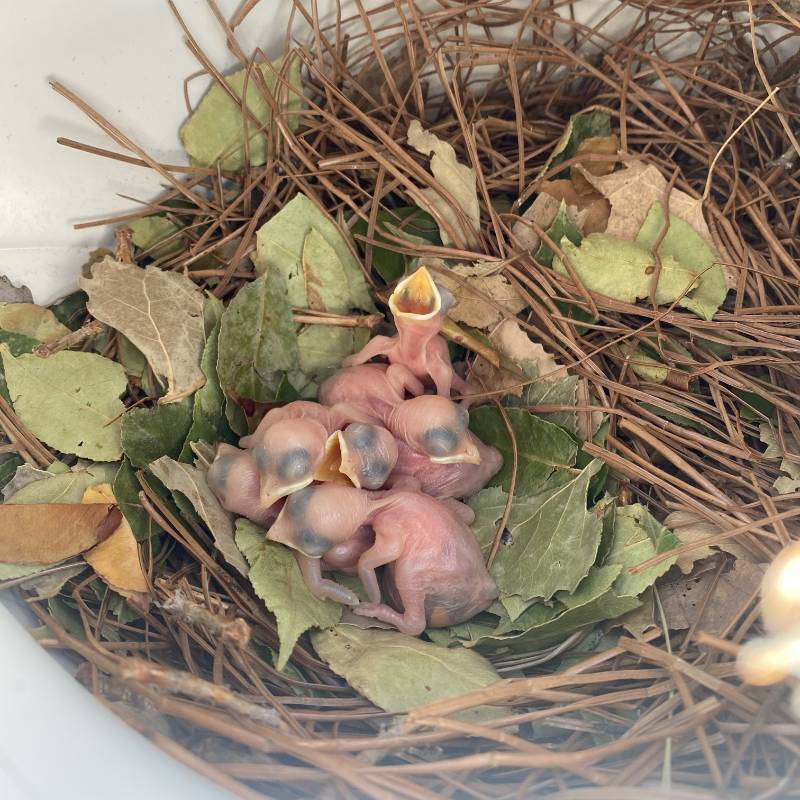
Habitat removal and the loss of natural nesting cavities has greatly impacted the purple martin. It now relies solely on manmade housing to nest and raise its young. Nest competition from the invasive European Starling and English Sparrow is also intense, often leaving the purple martin with few places to nest. In the past 50 years, it is believed that over one third of the population of purple martins in North America have been lost due to these threats.
Solutions
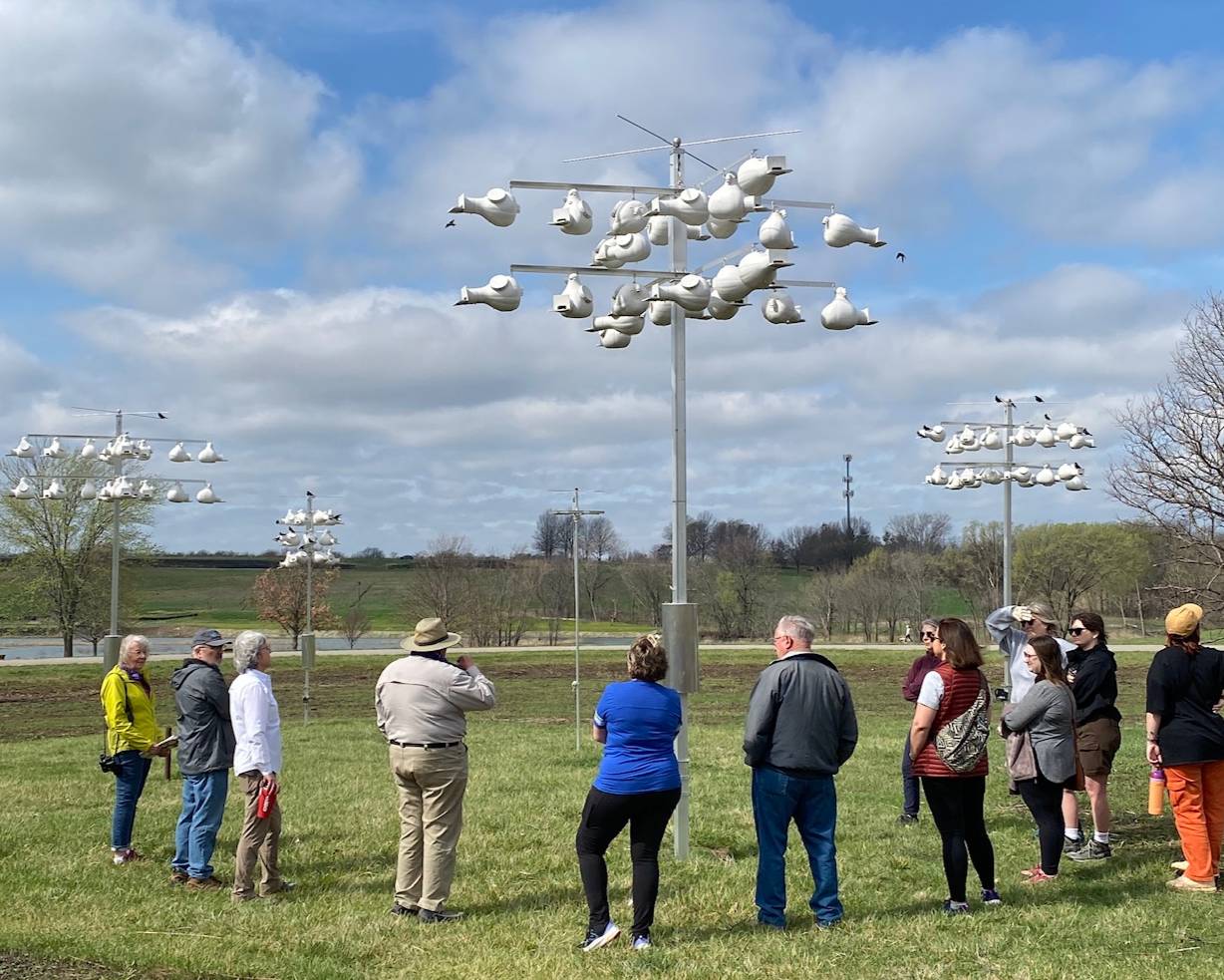
In 2021, in collaboration with Johnson County Parks and Recreation, Johnson County K-State Extension Master Naturalists established a Purple Martin Observation Project. The main goal of this project is to increase the number of nesting locations for purple martins across the county, positively impacting overall nest success. It currently provides purple martin nesting sites at 5 Johnson County Parks. Weekly nest checks are made by EMN volunteers to monitor, maintain, and record the progress of the nesting martins. Since beginning this project, Extension Master Naturalists have seen over 1,000 young birds fledge each year.
What Can You Do?
There are many things you can do to help purple martins in your area!
- Join the Johnson County K-State Extension Master Naturalist Program and begin work monitoring purple martin nests! Check out the EMN Application Process to learn more.
- Study up on purple martins and install your own gourd houses.
- Visit the Purple Martin Conservation Association to learn even more ways to help purple martins.