Prairies to Farms: The Intersection of Natural Resources and Agriculture
The resources available for us to use that are naturally made are known as “natural resources”. These include soil, wildlife, minerals, water, and much more. Agriculture, defined by Merriam-Webster as the science, art, or practice of cultivating the soil, producing crops, and raising livestock, utilizes many different natural resources. One of those natural resources that highly impacts the type of agriculture being done in an area is soil quality. The better the soil, the higher the yields, and with higher yields, the higher the profit. If the soil quality is poor or the terrain is too steep or rocky, raising cattle may be the better choice over row crops. Here in Johnson County, we have both row crop farms and cattle farms. Why is that?
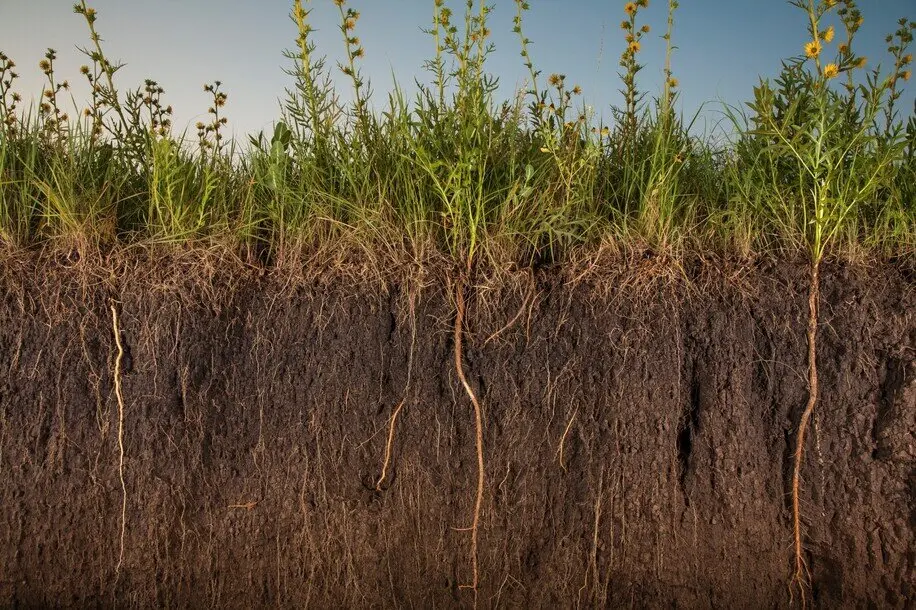
The answer lies in Johnson County’s past. This area used to be predominantly tall grass prairie. Tall grass prairies are ecosystems that evolved to benefit from frequent disturbance from fire and grazing. The plants found in tall grass prairies have deep branching roots that allow them to survive during unfavorable weather conditions. Most importantly, due to thousands of years of grass growth and death, the topsoil of a functioning prairie is rich in nutrients, making it the perfect place to grow high-yielding crops. The majority of the Midwest has at least 3 to 6 feet of rich topsoil for ag producers to use. In some places in Illinois and Iowa, that number grows to well over 10 feet. In Johnson County, the average topsoil layer is 2 to 6 inches. This is largely due to the topography of the county, where the bedrock is very close to the surface in many areas. Because of this, certain parts of the county are suitable for raising row crops, while other areas are not. Those areas focus on livestock instead, which is more suited for rolling hills and rocky soil.
Because of this, the Johnson County Fair showcases the strength of both row crop farming and livestock raising in the county. Walking around the fairgrounds, try to think of what natural resource(s) made each project possible and how many of our lives are shaped by the ecological past of the region we live in.
by Amy Keigher, Natural Resources Agent, 2026