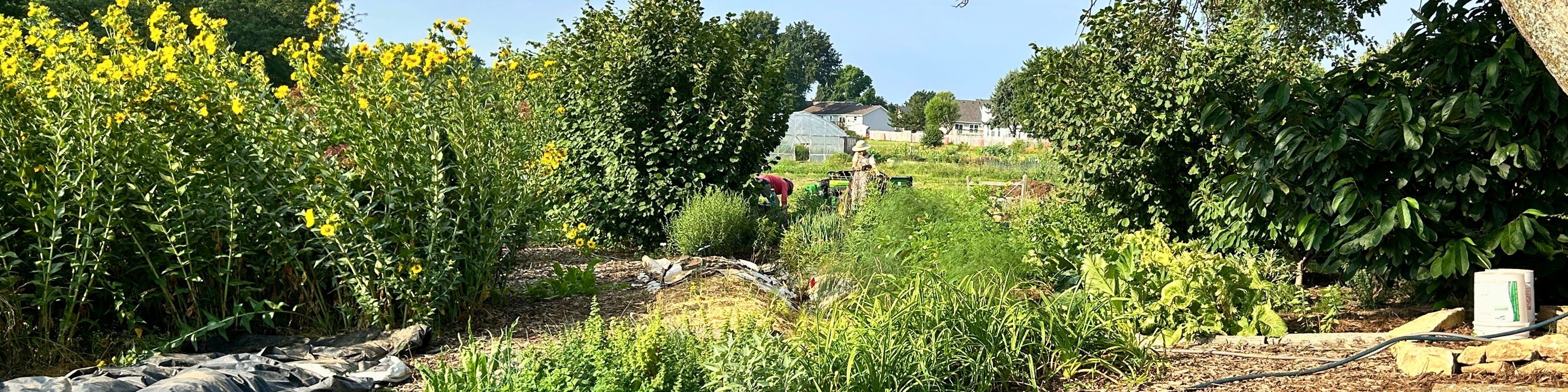
Welcome to the Food Forest
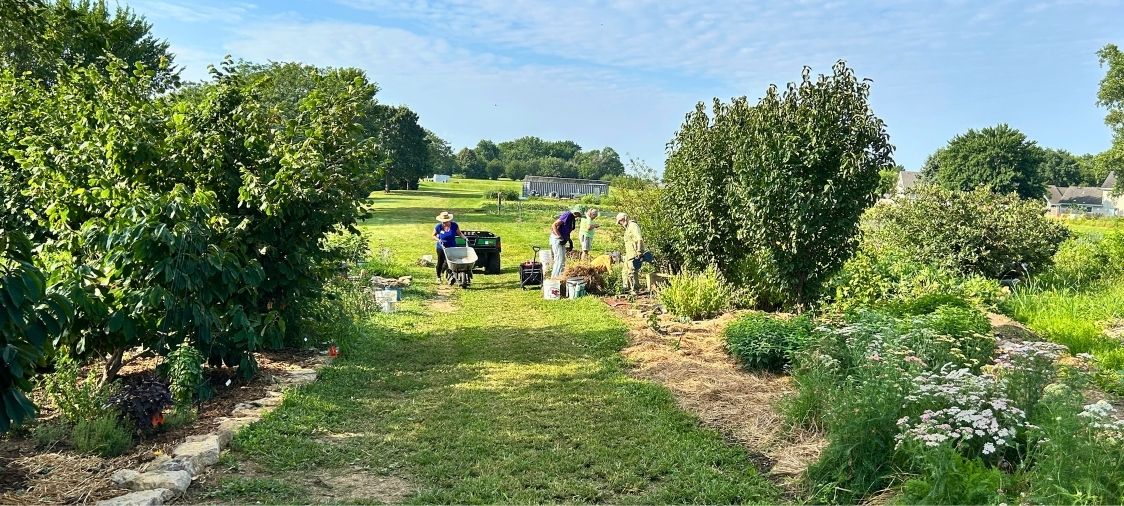
A place to wander, wonder, and learn about edible plants and native species that work together in a resilient ecosystem.
The Food Forest on The Stu Shafer Open Petal Farm at Johnson County Community College is the newest addition to the Extension Master Gardener (EMG) and Extension Master Naturalist (EMN) demonstration gardens and the first large-scale collaboration between the two programs.
A partnership between Johnson County K-State Extension and Stu Shafer Open Petal Farm at Johnson County Community College, this living landscape showcases how edible plants, native species, and ecological design principles can come together to create a resilient, productive, and beautiful community space.
Designed and maintained by Extension volunteers and JCCC students, the Food Forest serves as a hands-on learning environment where visitors can explore sustainable gardening practices, learn about Kansas native and adapted plants, and experience regenerative land stewardship in action. The garden features a diverse collection of fruit and nut trees, shrubs, herbs, vegetables, and support plants, demonstrating how these species can work together as a healthy ecosystem.
More than just a garden, the Food Forest is a living example of how people and landscapes can thrive together. Designed as a perennial, layered ecosystem, it applies the principles of permaculture, working with nature rather than against it, to create a space that is productive, resilient, and welcoming for both people, pollinators, and wildlife.
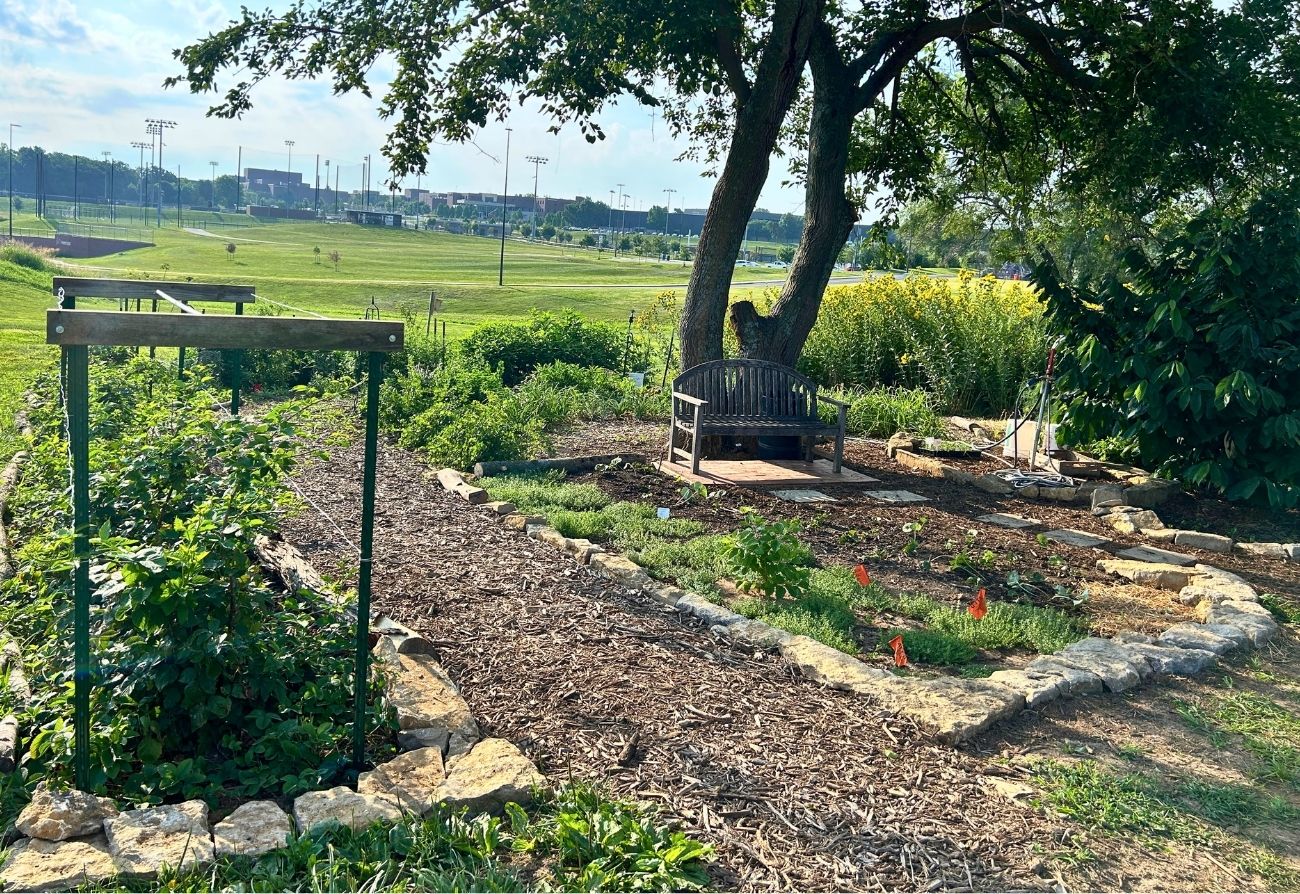
Explore the Food Forest
Wander through nine unique garden spaces that showcase edible plants, native species, regenerative gardening, and the beauty of working with nature. Each area highlights a different aspect of sustainable food production and ecological design.
The Entry Guild
The Entry Guild welcomes and orients visitors as they begin exploring the Food Forest. This space introduces the principles of the garden while showcasing a collection of Kansas native grasses and prairie plants that provide beauty, habitat, and seasonal interest. A cherry tree and two fig trees demonstrate how edible plants can be thoughtfully integrated alongside native species to create a productive and inviting landscape.
Pollinators: Pollen, Nectar & Habitat
This garden highlights the important role pollinators play in healthy ecosystems and food production. A pollinator puddling station provides water and essential minerals for butterflies, moths, bees, and other beneficial insects. Hazelnut and elderberry shrubs add another layer to the garden, producing edible crops while also providing food and habitat for wildlife throughout the year.
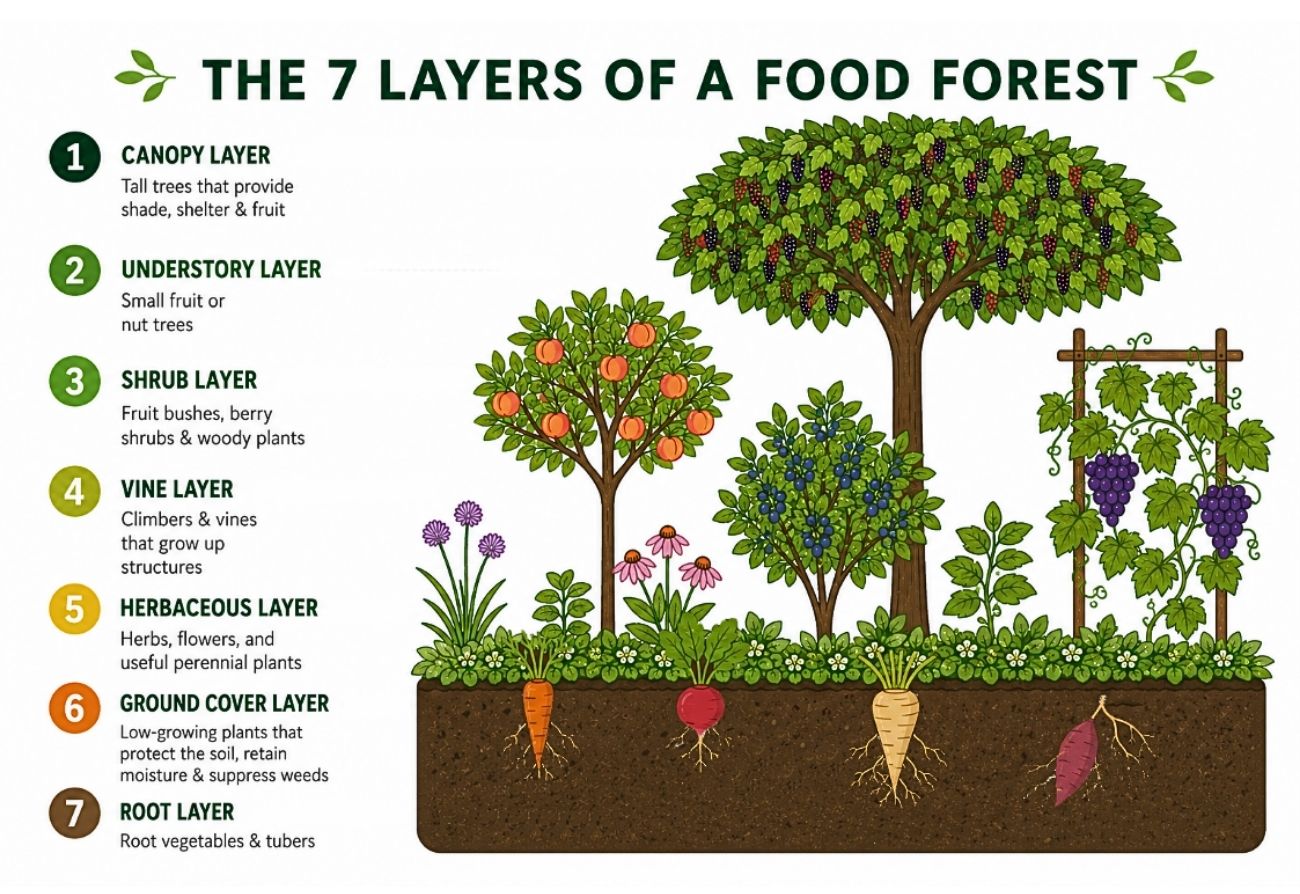
The Seven Layers of a Food Forest
This garden demonstrates the seven layers that make up a food forest, a design approach inspired by the structure and function of a natural woodland. By combining trees, shrubs, herbs, groundcovers, vines, root crops, and fungi, these layered plantings work together to maximize space, improve biodiversity, and create a productive, self-sustaining ecosystem.
Nativars
This garden showcases a variety of ornamental and edible nativars, cultivated selections of native plants chosen for desirable traits such as flower color, fruit production, growth habit, or size. Nativars offer an opportunity to incorporate the ecological value of native plants while adding unique characteristics that support the goals of a productive and diverse food forest.
Kansas Natives
This garden highlights locally adapted plant species native to Kansas and showcases the important role these plants play in supporting biodiversity, wildlife, and resilient landscapes. These species are well suited to Kansas growing conditions and demonstrate how native plants can be thoughtfully incorporated into gardens and designed ecosystems.
Fruit & Herbs
This garden blends culinary and medicinal herbs with a variety of fruit trees, including apple, pear, peach, fig, and jujube. Together, these plants showcase how edible landscapes can combine beauty, function, and productivity while providing a diverse selection of foods for people and wildlife.
Berries & Small Fruit Guild
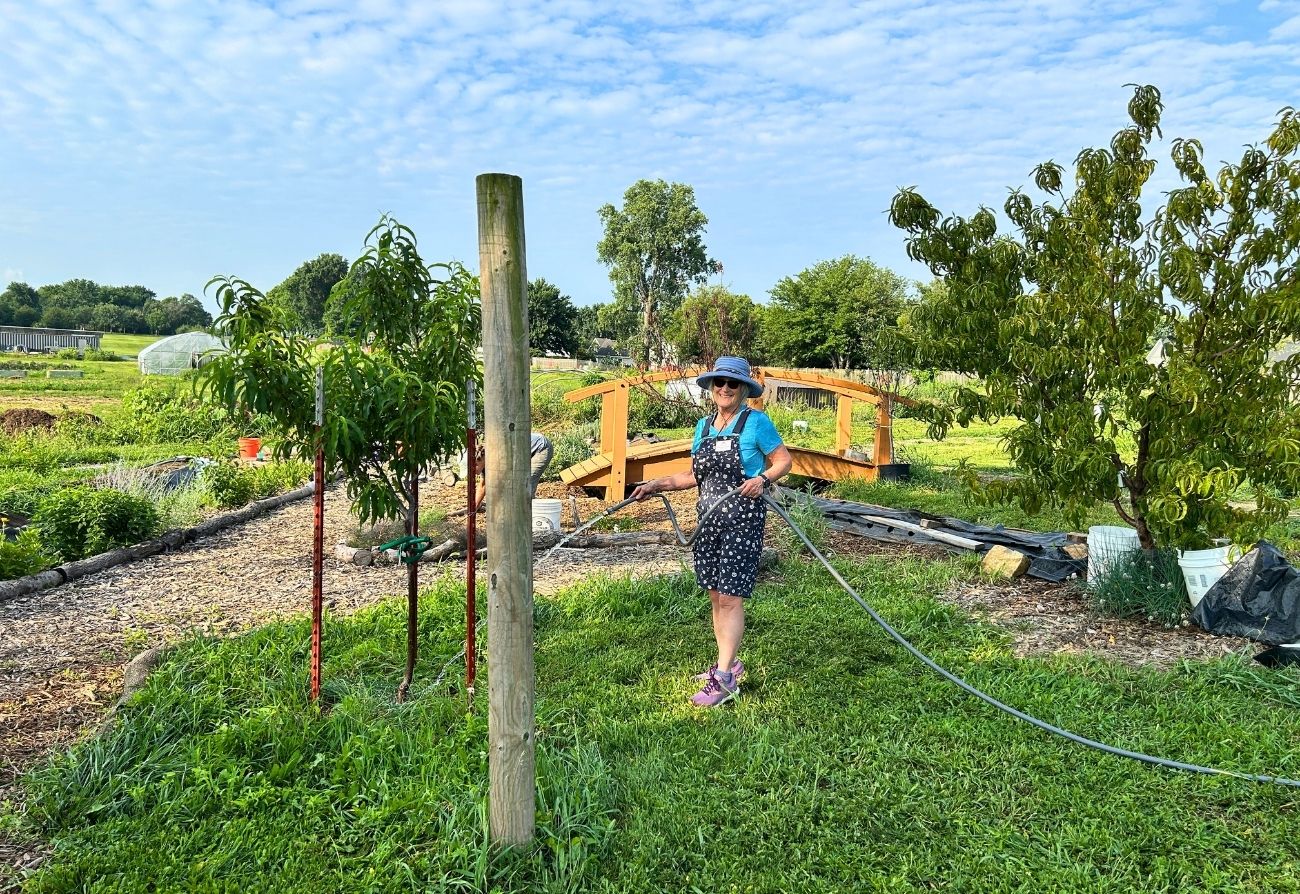
This garden showcases a variety of berry and small fruit producing plants that provide harvest opportunities throughout the growing season. By incorporating plants with different growth habits and harvest times, this space demonstrates how food forests can offer a diverse and continuous supply of fresh, edible crops.
Mandala Design Food Forest
This garden features a circular layout that emphasizes symmetry, accessibility, and connection with the surrounding landscape. The design creates a welcoming space for visitors to explore, pause, and enjoy the beauty and productivity of a food forest ecosystem.
Backyard Food Forests
Coming in spring 2027, this garden will showcase three guilds designed as examples of home-scale permaculture for homeowners seeking inspiration for their own landscapes. Each guild will feature a central fruit or nut tree surrounded by layers of edible plants and supportive species that work together to create a productive, resilient, and diverse ecosystem.
Visit the Food Forest
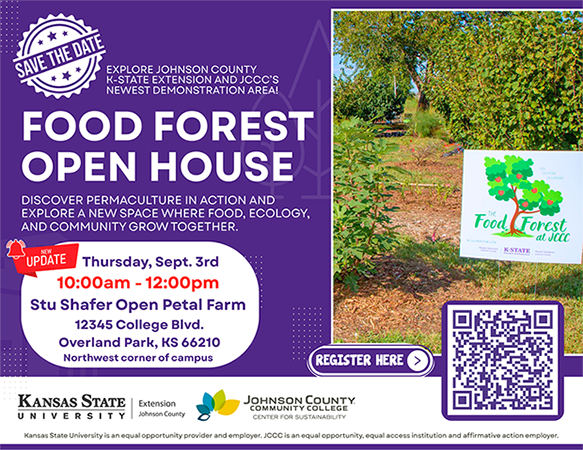 Experience a living landscape where edible plants, native species, and ecological design come together. Explore the gardens, discover new ideas, and see how food forests can create productive spaces for people and nature.
The Food Forest is located within The Stu Shafer Open Petal Farm at the Northwest corner of the Johnson County Community College Campus at 12345 College Blvd. Overland Park, Ks 66210. Parking is available to the south next to the Police Academy building and to the east next to the sports fields.
The Food Forest is open to visitors year-round. Weather permitting, Master Gardeners and Master Naturalists are typically on-site Thursday mornings, April through October. If you would like to visit us, we’d be happy to answer questions and show you around. To schedule a tour on another day, please contact us .