Backyard Garden Vegetable Garden I | Johnson County K‑State Extension
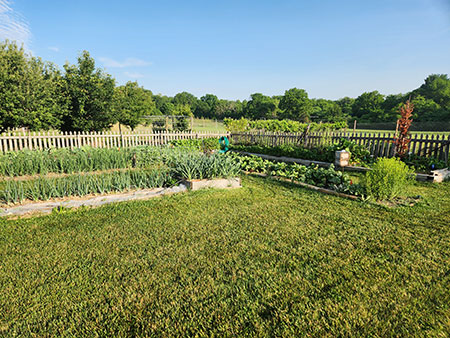
This garden grows healthy vegetables targeted for local food pantries and uses techniques to maximize harvests. Our garden maintains a no-till and organic approach for planting, weeding, and pest/disease control.
Points of Interest:
- Succession planting of a specific crop in “waves”:
- We planted radishes at regular intervals (approximately two weeks) throughout the spring, so that we would have radishes available over a longer period. We continued to plant/harvest until the harvest became bitter due to the heat.
- Succession planting of different crops in the same area, after the initial crop is harvested:
- Most of our beds are used for both a spring crop and a summer or fall crop. For example, we had beets and radishes as spring crops in a bed where peppers are growing in the summer.
- Intercropping: The simultaneous culture of two or more vegetables in the same garden space within the same growing season.
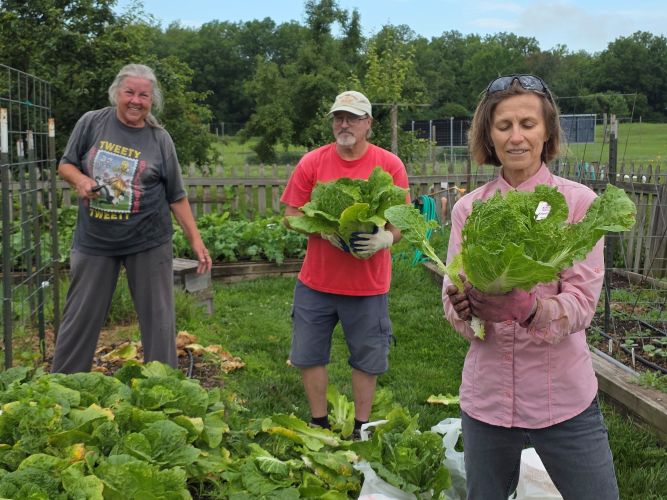
- In the spring, our small collard plants were intercropped with onions. We removed the onions when they matured, providing more space for the collards to grow larger and continue to produce throughout the growing season.
- Vertical gardening:
- We are growing tomatoes trellised against a cattle panel in the middle of a bed. Because the tomato plants are kept relatively “flat” against the vertical panel, it allows us to grow other crops in the same space that would otherwise be taken up by round tomato cages. In the spring, the bed contained Napa cabbage to the north of the tomato plants and beets to the south. We planted green beans in late July in the space where the Napa cabbage had been.
- Our zucchini plants are being tied to a stake and the lower leaves are being removed to keep the squash plants’ leaves off the ground. Leaves on the ground typically provide protective cover for adult and nymph squash bugs. By keeping the leaves off of the ground, we are removing their protection. This technique has additional benefits of better air flow and easier harvest. Growing the plant vertically also allows intercropping.
Tips:
- We don’t till.
- By not tilling, we don’t bring dormant seeds up to the soil’s surface allowing them to germinate. Additionally, tilling destroys soil structure and disrupts the beneficial soil biology such as microorganisms, fungi, nematodes, earthworms, protozoa and others that break down organic matter. These microorganisms also provide nutrients and aeration to the soil, assisting in soil drainage and moisture retention.
- Mulching is important to conserve moisture, regulate soil temperature, reduce weed pressure and add organic matter.
- We cover many of our beds with 2 layers of newspaper covered with straw. We find 2 layers of newspaper is effective and begins decomposing by the end of the season.
- Chopped tree leaves, collected each fall, can be applied a few inches deep to still allow soil oxygen exchange for roots, and make a great environment for sweetpotato vine nodes to self-root and grow more produce.
- Fertilize at appropriate times as needed by the plant growth:
- Tomatoes at first flower
- Onions/allium family three weeks after planting
- Sweetpotatoes at planting
- Consider pest exclusion. We use the following methods:
- Electric fence for raccoons
- Row cover for early insect pests and rabbits
- Tulle fabric for insect pests and rabbits (allows better airflow during summer heat)
- Try resistant varieties to further maximize your harvest.
- Celebrity tomatoes are a highly-productive determinate variety that tends to produce a majority of its crop at one time. They are resistant to many common tomato fungal and viral diseases. This year, we will grow Celebrity Plus, which is reported to have enhanced disease resistance when compared to Celebrity.
- Celebrity tomatoes also appear to have resistance to stink bugs, a problem in the Backyard Garden.
Garden Address
35230 W 135th St
Olathe, KS 66061
Master Gardeners are available to answer questions and provide tours while they work the gardens Wednesday mornings, March to October. To schedule a visit on another day (M-F), please contact us at bygjocoemg@gmail.com
Have questions? The Garden Hotline is staffed by trained EMG volunteers and Extension staff who will assist you with questions.
Phone: (913) 715-7050
Email: garden.help@jocogov.org