Benefiting the Beneficials
With monarchs now making their way south for autumn, thinking beyond what our gardens can produce for us and considering what they can provide for the insects moving through them is particularly timely!
Often, when considering what to plant in our vegetable gardens, the obvious and most inherent beneficiary is going to be ourselves. After all, we invested our hard-earned money, precious time, and back-breaking labor – we should be the beneficiaries! Nevertheless, there are also some integrated approaches to growing food that can be tackled in such a way that other organisms also benefit from the crop. In addition to wildlife considerations, this includes pollinators.
Every season I will be approached by excited gardeners exclaiming, “Look at the caterpillars on my dill!” 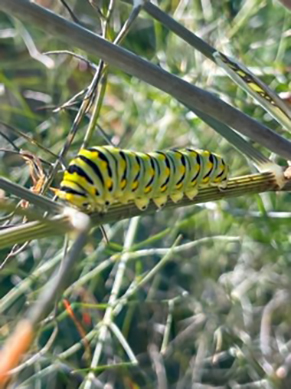 “Look at my fennel!” and I too share in their excitement. While we may ultimately be the intended beneficiaries of vegetable gardens, crop selection can also (intentionally or otherwise) wind up benefiting an entirely different kind of organism.
For the caterpillars of black swallowtail butterflies, dill, fennel, parsley, carrot, parsnip, and cilantro can all be grown in KC-area gardens to support the developing caterpillars while still acting as harvestable food sources for us. If looking to support zebra swallowtail butterflies, not to be confused with the black swallowtails, pawpaw trees produce Kansas’ only native edible fruit, with a custardy texture and taste similar to banana and mango combined. They are the sole host plant of the zebra swallowtail butterflies as they develop. For bumblebees and native squash bees, zucchini, pumpkins, summer squash, gourds, and cucurbits are great options that provide the pollinators with a hearty snack while still filling your kitchen. Elsewhere, other flowering crops, with a special emphasis on sunflowers, produce ample food for local bees.
The list even continues when you don’t mind sharing some of your food with the pollinators! Though technically considered a nuisance, as they can be detrimental to vegetable plants when too prevalent, tomato hornworms found on tomatoes, pepper, eggplant, or potatoes actually develop into hawk moths! The trick is allowing them enough leniency to snack, while not allowing them to decimate a plant. Often times, in vigorous ecosystems, these can exist naturally controlled in gardens, while parasitic wasps prevent the larvae populations from getting too big.
While working to support pollinators in the vegetable garden, gardeners will also do well to remember that other practices in the landscape can ultimately affect their prevalence. Killing every dandelion or spot of henbit in the yard at the start of spring, for example, often takes away a vital food source for early-emerging bees while nothing else is flowering. Another example entails utilizing organic or inorganic pesticides during the prime of the day. Applied later in the evening, when permitted by the product label, pollinators are more likely to be inactive, whereas otherwise they may be actively engaging in harmful exposure. For squash growers in particular, they should remember that squash flowers only open early in the morning. Thus, pollinators that interact with these flowers will also be active, and treatments during this timeframe should be avoided. Though it is recommended to fully treat plants that may be enduring pest infestations, so as to cull as much of a pest population as possible, these treatments should ideally not make their way onto flowers for purposes of protecting pollinators. Rather, it is better to remove flowers, treat the full plant, and then allow new flowers to develop.
With a little forethought and intentionality, your vegetable garden space can, in fact, be a pollinator haven and productive (human) food source, providing sustenance not only for ourselves, but for the many insects that share these spaces with us. So, as you wander through your garden this fall, admiring the monarchs and collecting the remainder of your harvests, keep in mind for next season – what can I plant that’s going to sustain us both?
by Anthony Reardon, Horticulture Small Farms Agent, 2026