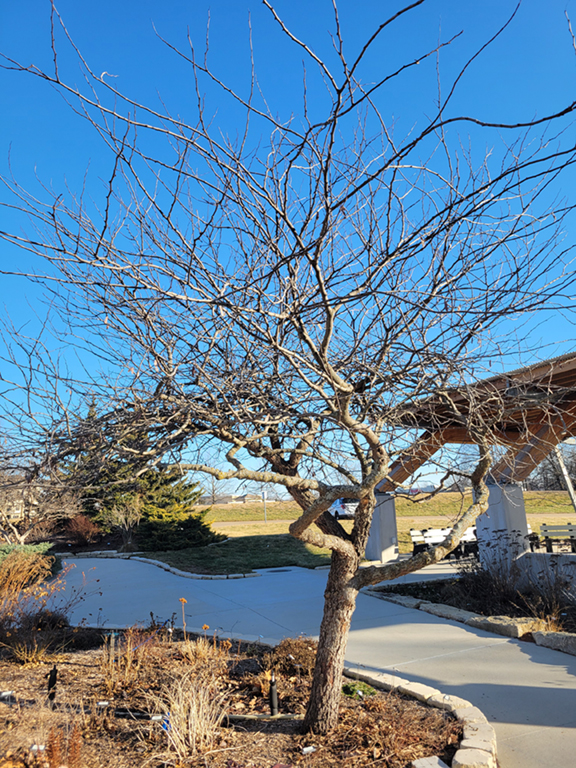
Trim Trees to Thrive
The time has finally come. Get your boots, gloves, thick pants, and heavy coat, and don’t forget your warmest hat. Before you walk outside, grab a pair of sunglasses; you’ll need ‘em. Why? Because you are going to be looking up! Up in a tree, that is.
The best time to prune most of our deciduous trees and shrubs is late winter. One reason is that insect pests and plant pathogens are dormant, just like the plants during the winter. If you were to make a pruning cut in the middle of the growing season, the plant releases an odorless gas called ethylene. This gas signals to insect pests that the plant is undergoing stress and is susceptible to herbivory. Increased herbivory will increase the gas released, signaling more pests. However, when pruning cuts are made in the late winter when life is dormant outside, the gas cannot signal to any surrounding pest. 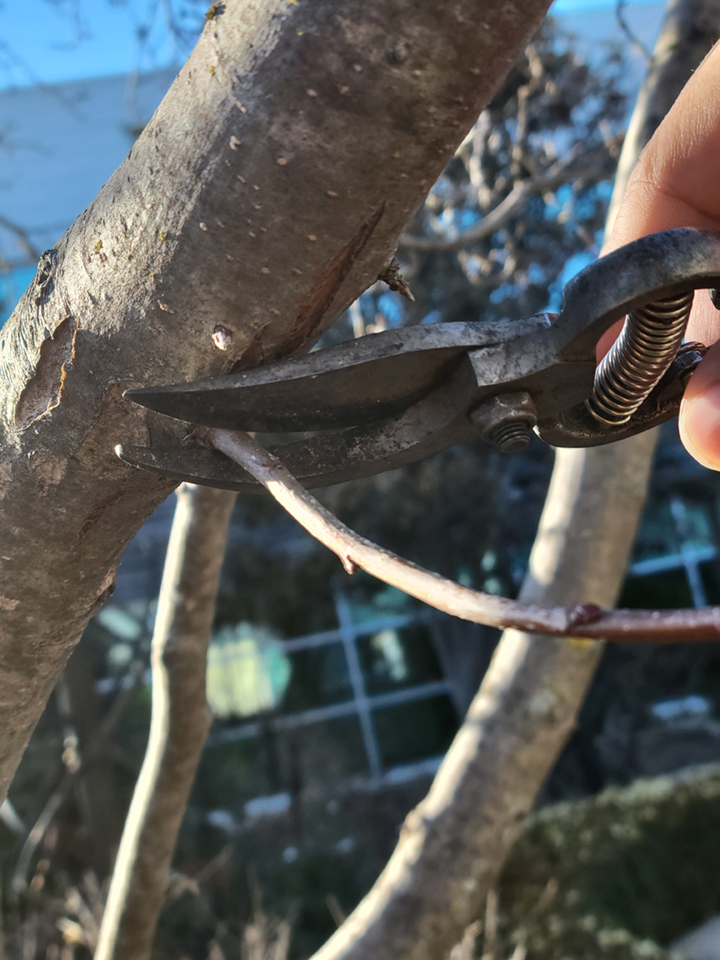
When a pruning cut is made in late winter, the tree will begin the wound-healing process immediately. This process seals the wound from pathogens that can damage the inner vascular system. Plant pathogens will break dormancy with the warm temperatures and abundance of moisture. In this part of the Midwest, early spring, around late March, is when we see favorable conditions for bacterial and fungal plant diseases. That is why it is essential to finish your pruning before that time.
There are valuable benefits to pruning your tree. Tree pruning can improve the structure and beauty of a specimen. When a tree grows without attention, branches can become crisscrossed and lay on top of one another. When branches touch and rub on each other, perpetually reopening a wound that can become an entry point for disease. This dense growth can start to shade out lower branches, causing them to die back to the trunk. Dead branches can fall from high winds or storms, damaging property and causing injury to people. Thinning your tree’s canopy can mitigate storm or wind damage to your tree and the surrounding area.
Allowing more airflow to penetrate the canopy can benefit the tree’s ability to resist foliar leaf diseases. Diseases that attack the leaves require a prolonged period of leaf wetness. Increased airflow dramatically reduces the leaf wetness period, decreasing disease pressure.
Knowing the plant material you are working with is important because not all trees and shrubs should be pruned in late winter. If your tree’s main appeal is the spring flowers, such as flowering crabapple, saucer magnolia, or lilac, it would be best to wait until after flowering to begin pruning. It won’t be the end of the plant if you prune them outside their ideal window. However, there will be a smaller number of flowers the following season. Some trees and shrubs will still need to leaf out before pruning. Birch, maple, and walnut will bleed sap if cut before the leaf buds break open.
When pruning larger diameter branches, remember to use the appropriate tool. Hand pruners are not the correct tool for branches larger than ¾ inches, and loppers work well up to 1 ½ inches. Anything above that will require a hand saw. Always wear the proper personal protective equipment when working in the landscape.
by Markis Hill, Horticulture, Ornamentals and Turf Agent