Planting for Pollinators: Fabulous Fall Color with a Purpose
Fall Brings New Life to the Garden
The worst of the heat and humidity is finally behind us, and autumn ushers in crisp air and brilliant color. Reds, yellows, and purples fill the landscape and remind us that fall gardens still have plenty of life left. While many cultivated plants offer ornamental appeal, not all of them provide food for pollinators.
Flowers are the reproductive parts of plants, typically containing pistils, stamens, anthers, ovules, etc. Some popular varieties—such as the mums you see everywhere when fall arrives—are bred without the pollen-producing structures pollinators need. These flowers look nice, but don’t feed bees, butterflies, or other beneficial insects.
Why the Succession of Bloom Matters
Pollinators need a steady supply of nectar and pollen from spring through fall. A garden that blooms only in summer leaves hungry insects with few resources late in the year. That’s why planning for succession of bloom—choosing plants that flower at different times—is essential. By adding fall-blooming natives, you can extend your garden’s value to pollinators well beyond the summer months.
Fall Favorites for Pollinators
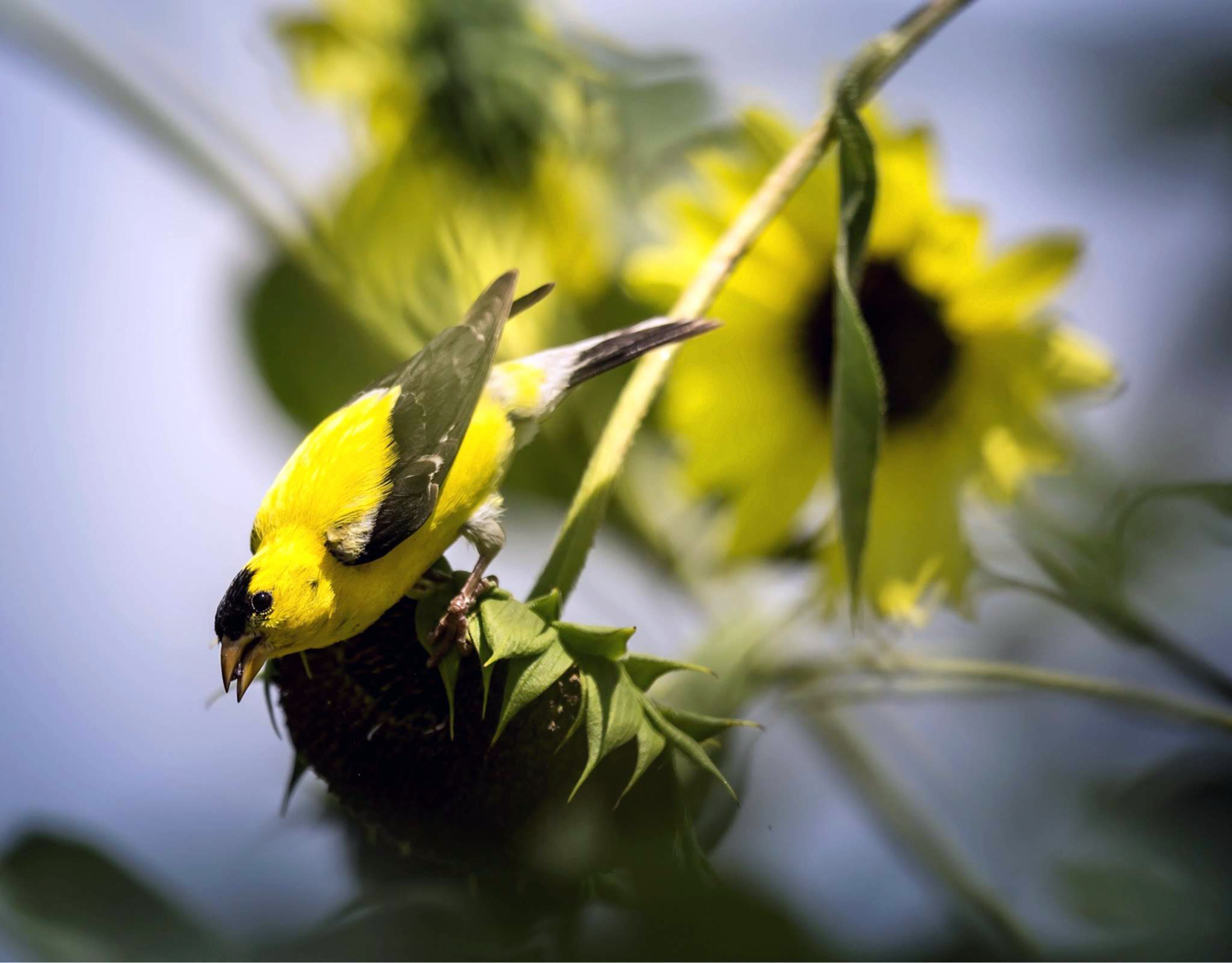
- Sunflowers (Helianthus) The Kansas state flower, the sunflower (Helianthus annuus), is more than just a cheerful bloom. It supports over 150 insect species, from beetles and weevils to pollinators. It grows everywhere and has striking yellow blooms. Once flowering ends (and sometimes during flowering, goldfinches in particular love to partake immediately!), the seeds provide food for birds throughout the winter.
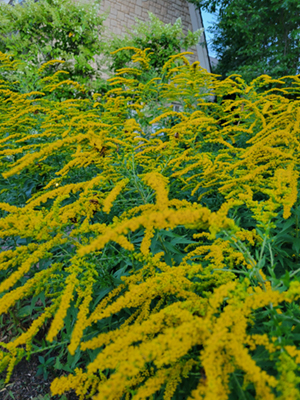
- Goldenrod (Solidago) Goldenrod’s bright yellow flowers shine in the fall landscape and provide nectar when few other plants are in bloom. At least 11 bee species rely exclusively on goldenrod, and more than 50 insects use it as a host plant. Two interesting examples of insects that need goldenrods are the goldenrod gall fly and the goldenrod gall moth. When these insects are larvae, they burrow into the stem, causing the plant to create a gall, or growth, that feeds them until they pupate inside the gall. Birds also benefit from feeding on the seeds.
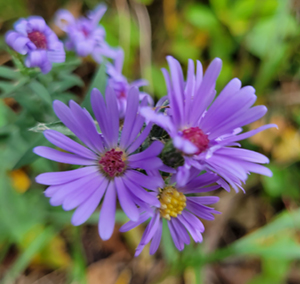
- American Asters (Symphyotrichum and Eurybia) Asters are essential fall flowers, serving as host plants for at least 100 butterfly species and providing nectar to 33 specialist native bees. With 23 species found in Kansas, they are a versatile and colorful choice for extending bloom into late autumn.
Supporting Pollinators Year-Round
When planting for pollinators, think beyond color. Select native plants with complete flower parts that offer nectar and pollen. Include a variety of species that bloom in spring, summer, and fall to ensure pollinators have food throughout the growing season. Many native plants are available for purchase now at local plant sales—making fall the perfect time to plan and plant for next year. Resources to help you plan in advance and make your lists can be found in our Horticulture Native Plants area.
by Markis Hill, Horticulture Turf and Ornamentals Agent, 2025