Blooms that Better Butterflies-Supporting Caterpillars in the Home Garden
Supporting Native Caterpillars with Non-Native Host Plants
Previously, I discussed how certain non-native plants can be beneficial to pollinators by providing a nectar and pollen source. The plants I mentioned will accomplish just that, but there is also another type of benefit that these plants can provide: being a host plant. A host plant supplies food, shelter, or plays a crucial role in the reproduction of its inhabitants. This article highlights non-native plants that can also serve as host plants for our native caterpillars.
Why Caterpillars Matter in the Garden Ecosystem
Providing plants for caterpillars to feed on actively may seem like a waste of money to people who enjoy looking at plants that don’t appear to be actively being fed on, especially if you are purchasing expensive plants. However, it is essential to remember that these caterpillars play a crucial role in the overall food web. Without these insects, there would be fewer wasps, spiders, and birds in our environment, which could lead to cascading detrimental consequences. While the numbers of these caterpillars can sometimes be overwhelming, it is essential to note that these insects are native and have natural predators that will consume them over time.
What Is a Host Plant and Why It’s Important for Caterpillars
Several herbs mentioned in the last article will also serve as host plants for some of our native 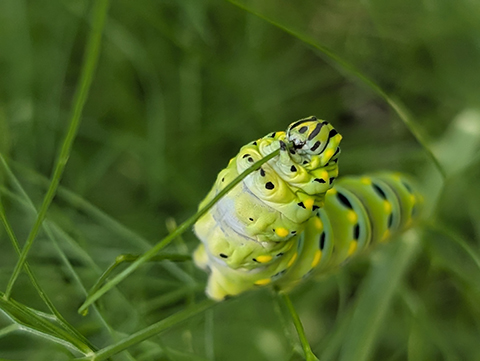 caterpillars. Basil, fennel, dill, parsley, and cilantro will all support these insects. Hornworms, cabbage loopers, cutworms, and budworms—which are native to the U.S.—can often be found eating the foliage of these herbs. Extension Master Gardeners especially appreciate parsley, as they often find black swallowtail butterfly (Papilio polyxenes) caterpillars feeding on its leaves.
Some of our most colorful and widely used ornamental flowers are also food for caterpillars. For instance, pansies, hollyhocks, clovers, and petunias are examples of flowers that can host caterpillars. Additionally, snapdragons are known to host common buckeye butterfly caterpillars.
Shelter Needs: Creating Safe Habitat for Caterpillars
Food is not the only resource caterpillars need to survive and thrive; they also require shelter. Caterpillars are at their most vulnerable stage of life. They cannot escape predators quickly, and most do not possess complex defensive mechanisms, such as those found in the monarch butterfly or tussock moth. As a result, they need safe places to hide and rest. Low-growing plants, those with large, broad leaves, and those with dense foliage provide an excellent habitat, shielding them from wind, rain, and predators.
Pupation Sites: Helping Caterpillars Complete Their Life Cycle
Pupating is another crucial activity for caterpillars. Species like the tomato hornworm will burrow into the soil for pupation. If their host plants are near the ground, the caterpillars can access the soil. Other species, such as monarch butterflies, seek a lateral branch or surface to attach to when forming their chrysalis. You may need to provide these pupation sites in your area. One way to accomplish this is by planting low-growing shrub-like plants near your host plants.
How Home Gardeners Can Support Caterpillars and Pollinators
Including these plants does not guarantee you will instantly attract caterpillars. The primary value lies in supporting butterfly and moth populations by providing food at every stage of their development. Planting native host and nectar plants, while also avoiding the use of insecticides, remains the most effective way to help. However, adding a diverse selection, even non-native cultivated crops, can offer greater opportunities for native insects to flourish in your environment.
by Markis Hill, Horticulture Turf and Ornamentals, 2025