Food Insecurity in Johnson County: How Extension Strengthens Local Food Systems
Often when one considers food insecurity, it may not be a topic they immediately associate with Johnson County. After all, Johnson County is fortunate enough to be one of the highest-earning counties in the country, with the population ranking fifth in median household income according to the 2020 census. At face value, affording and having access to food should not be an issue for a majority of residents. With a closer look, however, the nuances of food access quickly become clear. Stretched household budgets can make food purchasing one of the first areas households adjust when budgets are tight. At the same time, many local food-focused non-profits within the Kansas City metro have recently experienced reductions in operational funding, which has challenged the infrastructure supporting food access as grocery prices continue to rise. The reality many people in Johnson County face is that food insecurity is both a real and pressing challenge.
While working on a literature review toward my urban food systems graduate degree last spring, I had the opportunity to assess the role that Extension does and can play in addressing food security through its work supporting local food systems. Outside of my role as horticulture – small farms agent and Chelsea King’s role as nutrition, food safety, and health agent, which directly address food system support and operations, every specialty within Extension can, to some degree, be tied back to food systems work. Whether through 4-H education in food production, natural resources programming teaching sustainable land stewardship, community vitality efforts helping agricultural businesses thrive, or more, Extension and the many volunteers that lift it up play a strong role in helping area food systems thrive.
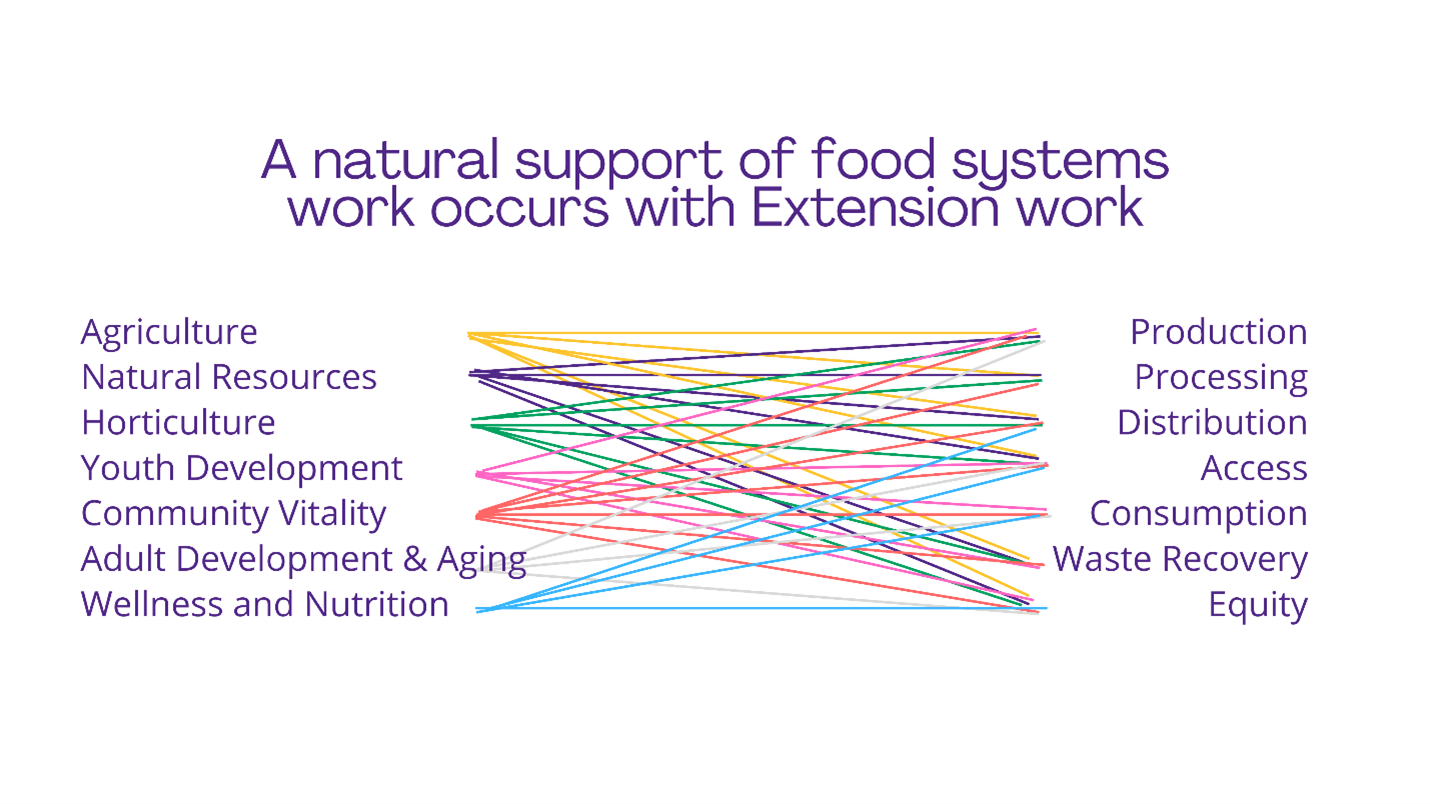
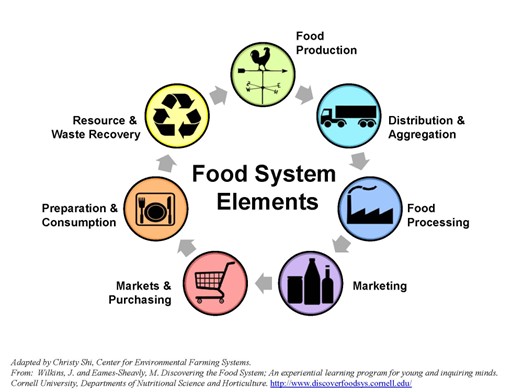
One facet that became clear in my literature review is that Extension has a unique combination of strengths that offer support not only to producers and consumers, but also to all of the middle entities at play when considering how food actually gets “from farm to fork.” As a whole, food systems include those engaged in production, distribution and aggregation, processing, marketing, purchasing, preparation and consumption, and finally waste recovery, looping back to production. In the middle of this vast system, food equity plays an essential role, helping to ensure that food access, affordability, and availability are considered at all stages. Extension’s work often lends a hand to the various entities within this structure, helping to strengthen the links that ultimately create a resilient, sustainable, and equitable local food system.
Outside of direct agent-led programming, our vast number of dedicated volunteers at Extension help us reach deep into the Johnson County community, educating residents on everything from backyard and community gardening, to food preparation and nutrition, to the distribution, access, and recovery of food. Food security is not a topic with a set solution but is an aptly dubbed “wicked problem;” nearly impossible to fully address and vastly worse without ongoing efforts. With community support, strong leadership, and the continued commitment of those willing to step up and help, we are able to, and will continue, building a better tomorrow.
by Anthony Reardon, Horticulture Small Farms Agent, 2025