Icy Winters Lead to Salty Springs
Safe Ice Melt Tips for Homeowners: Protect Your Lawn, Plants & Sidewalks
Why Ice Melt Residue Matters:
OLATHE, KS: I have a question for you. With all that snow we received, did you throw ice melt on your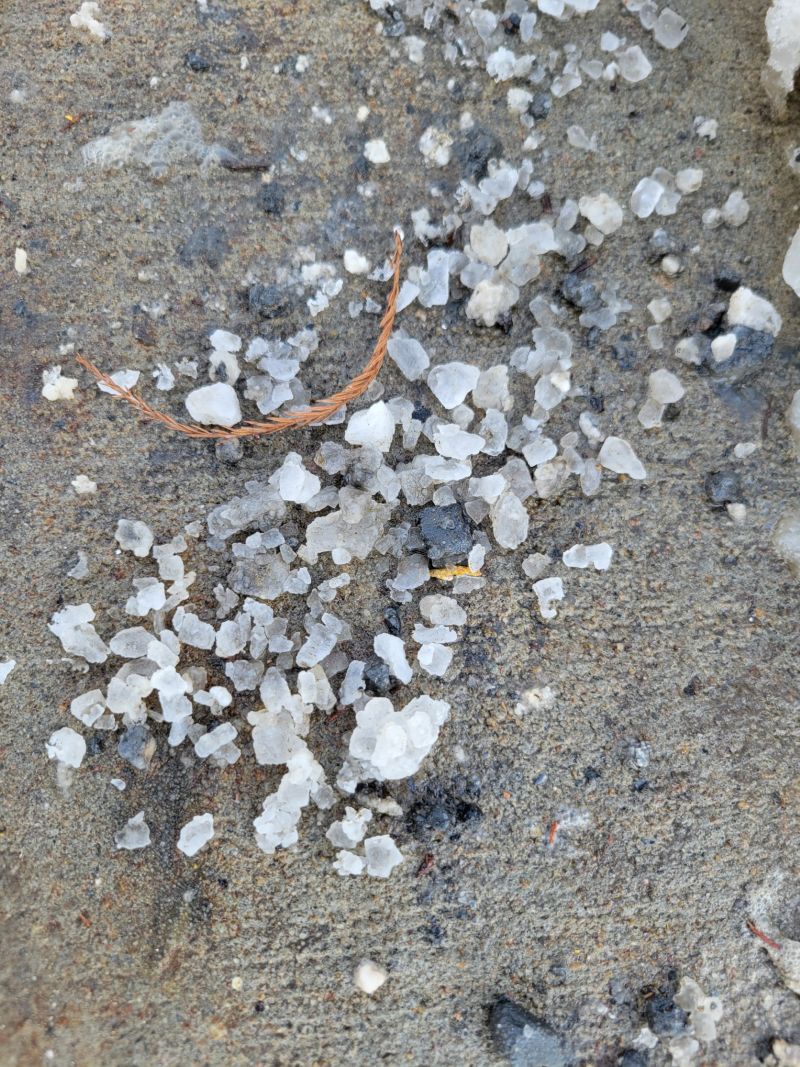 sidewalks and driveway? I also have a follow-up question: What do you do with the remaining salt once the threat of ice and snow has passed? Unfortunately, many people do not give ice melt a second thought once they throw it on the ground. The salt doesn’t just become a part of the sidewalks or other hard surfaces; it must go somewhere.
Standard Ice Melt Options and Their Effects
Rock salt is a common, relatively inexpensive option for melting ice on walkways and roads. The size of these individual salt rocks is fairly large. This makes them very noticeable when all the snow and ice are gone, often looking like gravel spread or dumped on the sidewalk. Since rock salt is sodium chloride (NaCl), it is not helpful to plants and, at high enough concentrations, toxic to them. Using sodium chloride on hard surfaces also causes significant wear, tear, and corrosion of concrete and metal.
There are several ice melts on the market with different chemical compositions, such as magnesium chloride (Mg2Cl), potassium chloride (KCl), and calcium chloride (CaCl2). These deicers are designed to melt ice at temperatures below 25°F, since that is the lower limit at which sodium chloride can melt ice. While these options have less potential to injure plant tissue, overuse can still damage vegetation. Calcium chloride and potassium chloride can be corrosive to metal and concrete.
Environmental Impacts of Leftover Salt
When these salts are left on roads or hard surfaces, they dissolve when the next rain event occurs. The contaminated water will either flow off the hard surface into the surrounding lawn or into storm drains and eventually into our waterways. When salty water gets into the lawn, the following spring, you will notice the grass is not growing near the sidewalk. Grass will look burnt or dead in an otherwise green lawn. Dead grass leads to bare spots, and bare spots allow weeds to establish. The salt that makes it down the storm drains and into our waterways will raise the concentration of dissolved salts in the water supply at large. High concentrations of chloride will affect the water's oxygen levels, the oxygen that fish, amphibians, and aquatic insects need to grow and thrive. Farmers and wildlife use this water, and if you like to drink tap water, you!
A Safer Alternative: Calcium Magnesium Acetate (CMA)
So, is there an option that can be used on surfaces that won’t burn my plants that are next to the sidewalk? Yes. Calcium magnesium acetate (CMA or CaMg2(CH3COO)6 for you chemistry buffs). Instead of containing a chloride compound, it is made from dolomitic limestone and acetic acid. Calcium magnesium acetate is effective at melting ice down to 5°F, and this product can be used around salt-sensitive plants without causing salt injury, making it the ideal alternative to chloride-based deicers.
Protect Your Home and the Environment
Whichever product you choose, please be sure to clean up once the threat of ice is gone. Sweep up the residue with a broom and dustpan. It will save your sidewalk, your shrubs, and your grass while also benefiting the downstream ecosystem.
by Markis HIll, Horticulture Turf and Ornamentals, February 2026