You Don't Need to be an Expert to Change a Young Person's Future
Many people assume you need to be an expert to volunteer with 4-H, but that’s simply not true. You don’t need to know everything about livestock, robotics, photography, or foods projects to have an impact on a child’s life. The most important qualification is caring about young people and showing up.
The work volunteers do in Johnson County 4-H is grounded with the Positive Youth Development and the 4-H Thriving Model framework, which focuses on helping young people build on their strengths. This framework explains that youth thrive when they participate in high-quality programs that provide supportive relationships, opportunities to explore interests, and chances to practice new skills. Further research shows that when youth experience these programs with caring adults, they develop important life skills like leadership, responsibility, and resilience, which will all benefit them long into adulthood.
In Johnson County 4-H, those conditions are created through everyday experiences; such as a club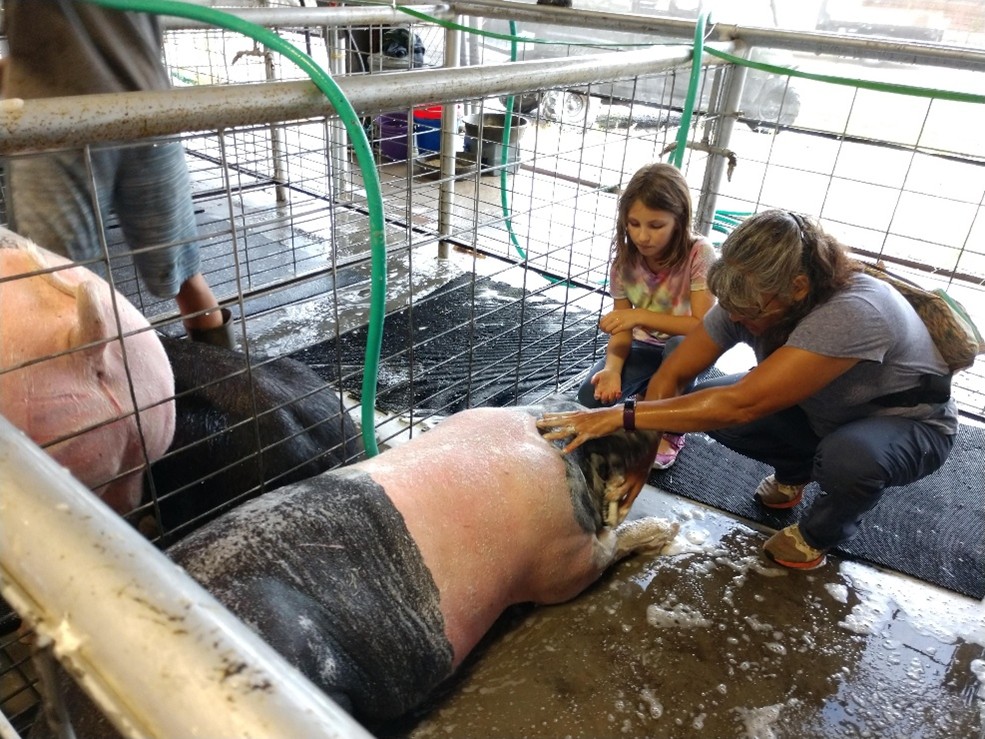 meeting where youth practice leading a discussion, a project where they try something new, or encouragement from an adult when a challenge makes them feel like giving up. The Thriving Model highlights the importance of helping youth discover their “spark” or a passion or interest that gives them purpose and motivation. When these sparks are supported by positive relationships with adults, youth are more likely to develop confidence, acquire goal-setting skills, and a desire to contribute to their communities.
Volunteers play a critical role in making this happen. Research across multiple states has shown that volunteers are an essential part of the youth development workforce in 4-H, providing supportive environments and mentorship that support youth as they grow. Whether volunteers are leading a project, helping organize an event, assisting with a club meeting, or simply encouraging a young person’s effort, they help create an environment that allows youth to thrive.
That’s why volunteering with 4-H doesn’t require expertise; it requires presence. The simple act of showing up, listening, and encouraging young people helps build supportive relationships are key to positive youth development.
So, if you care about helping young people discover their interests, build confidence, and develop skills that last a lifetime, you already qualify to be a Johnson County 4-H volunteer. Just ask the 4-H Team how you can start your volunteer journey today!
- Arnold, M. E. (2018). From Context to Outcomes: A Thriving Model for 4-H Youth Development Programs. Journal of Human Sciences and Extension.
- Arnold, M. E., & Gagnon, R. J. (2020). Positive Youth Development Theory in Practice: An Update on the 4-H Thriving Model. Journal of Youth Development.
- Grant, S., et al. (2020). The Impact of Volunteering: A Multi-State Study of 4-H Youth Development Volunteers. Journal of Youth Development.
by Lexi Ray, 4-H Youth Development Agent, April 2026