Seven Ways You Can Practice Gratitude with Youth in Your Life
Saying “thank you” and showing gratitude are valuable skills for both youth and adults. “Expressing gratitude has both intrinsic and extrinsic benefits and is good for the health of yourself and others. Intrinsic feelings are those within yourself. It means you are a happier person when you help others or appreciate the positive things in your life. Grateful people tend to have a healthier heart, sleep better, are empathetic, have stronger self-esteem, and are more resilient (Lyubomirsky 2008). Extrinsic benefits, or external rewards, also occur when you show gratitude to others. Expressing gratitude, even when done for extrinsic benefits, can result in positive intrinsic feelings for all involved.”
The 4-H Thriving Model recognizes that positive emotions and transcendent awareness help individuals have positive developmental outcomes (Arnold 2018). Saying thank you, writing notes, and giving gifts of gratitude help individuals find meaning and purpose, connect with others, and develop personal responsibility.
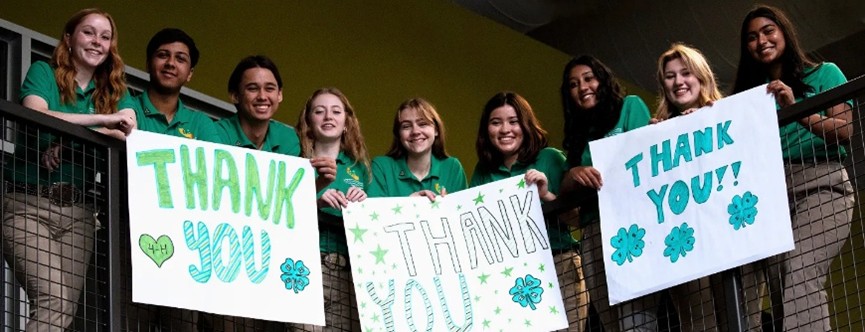
Here are 7 ways you can practice gratitude with the youth in your life this month:
Model and teach gratitude.
- Kids want to be like us as adults and we are their role models. Express gratitude often in their presence.
Spend time with your kids and be mindful when with them.
- Another way to show gratitude is by spending time together. Spend quality time with your kids and get rid of distractions, such as phones and technology.
Support your child’s autonomy.
- Support their strengths and talents and help them take ownership.
Use kids’ strengths to fuel gratitude.
- Once you have identified your child’s top strengths help them to use them whenever possible. This will enable them to strengthen their ability to be helpful, cooperative, and more grateful.
Help focus and support kids to achieve personal goals.
- It is easy to pick materialistic or extrinsic goals but help your child pursue goals that help provide community and intrinsic growth.
Encourage helping others and nurturing relationships.
- Teach them to lend a hand and be thoughtful to others.
Help kids find what matters to them.
- The deepest sense of gratitude comes from connecting to the bigger picture and doing things that make a difference in your world.
There is not one easy strategy to teach kids gratitude, but if you remain committed to planting the right  seeds in your children and model the behavior you want them to imitate you will see the results and have more grateful Johnson County Community citizens.
by Lexi Ray, 4-H Youth Development Agent, 2025